
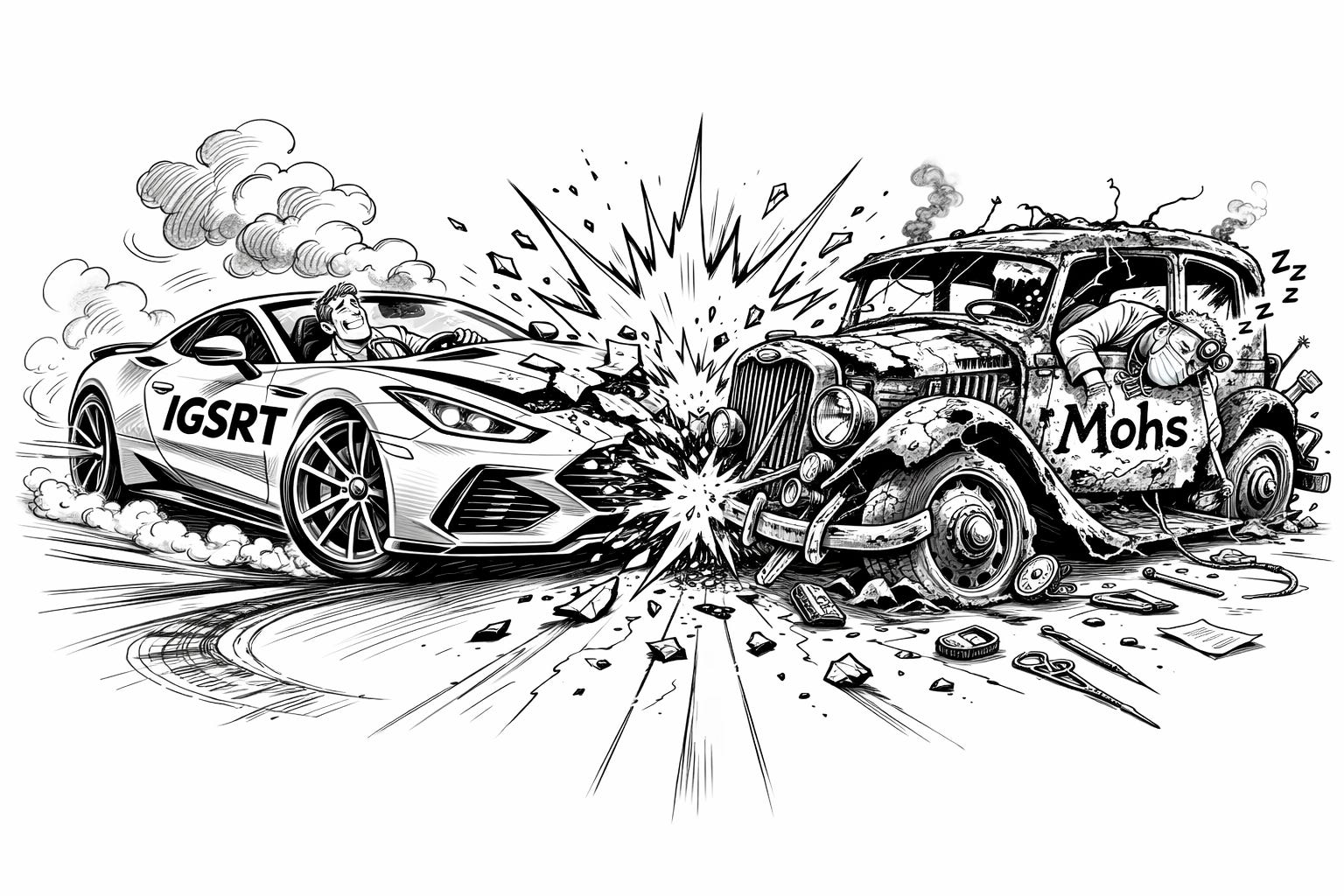
Image Guided Superficial Radiation Therapy (IGSRT) and Mohs Surgery (MOHS) are on an inevitable collision course. They represent fundamentally different philosophies in the treatment of nonmelanoma skin cancer, and those differences are becoming impossible for patients, physicians, and practice leaders to ignore.
The Surgical Standard: Mohs Surgery
Mohs Surgery has long been considered the gold standard for treating basal cell and squamous cell carcinomas. Its approach is straightforward and aggressive: remove the cancer by cutting it out layer by layer until no cancer cells remain. While highly effective, Mohs is still surgery. It requires injections of local anesthesia, physical excision of tissue, and reconstruction that often results in scarring. For many patients, especially those with facial lesions, advanced age, or multiple comorbidities, this can be painful, anxiety-inducing, and cosmetically impactful.
The Non-Surgical Standard: IGSRT
IGSRT, by contrast, takes an entirely different approach. Instead of cutting out cancerous tissue, IGSRT uses low-energy radiation guided by high-resolution ultrasound imaging to precisely target and damage cancer cells. Over time, the body naturally ejects those damaged cells and replaces them with healthy tissue. The treatment is non-invasive, painless, and does not require anesthesia, sutures, or downtime. From the patient’s perspective, the experience is dramatically different, and often far more appealing.
Clinical Outcomes Are Shifting the Conversation
The clinical outcomes are forcing a reevaluation of long-held assumptions. Large, peer-reviewed studies now demonstrate that IGSRT achieves cure rates comparable to Mohs Surgery for early-stage nonmelanoma skin cancers. At the same time, IGSRT consistently delivers superior cosmetic outcomes, particularly in cosmetically sensitive areas such as the nose, ears, eyelids, and lips. When cancer cells are replaced with healthy tissue rather than scar tissue, the difference is visible.
The Informed Patient Changes the Equation
This is where the collision becomes inevitable. As patients become more informed consumers of healthcare, they are increasingly asking not just “Will this cure my cancer?” but “What will I look like afterward?” and “What will this feel like?” In that conversation, a painless, non-surgical option with excellent cure rates is difficult to dismiss.
Operational and Strategic Implications for Practices
For dermatology practices, the implications extend beyond clinical philosophy. Mohs is resource-intensive, requiring specialized surgeons, staff, and infrastructure. IGSRT, on the other hand, expands treatment capabilities without relying solely on surgical throughput. It also allows practices to serve patients who are poor surgical candidates or who simply decline surgery when offered an alternative.
Not Replacement: Evolution
This is not a question of replacing Mohs Surgery altogether. Mohs will continue to play a critical role, particularly for aggressive or advanced tumors. But the notion that surgery must always be the first, or only, option is rapidly eroding. IGSRT challenges the surgical default by offering a patient-centered alternative that aligns with modern expectations of comfort, outcomes, and choice.
The Future of Skin Cancer Treatment
The collision course between IGSRT and Mohs Surgery is not driven by rivalry, but by evolution. As technology advances and patient preferences shift, dermatology is being asked to broaden its definition of excellence. In that future, the practices that thrive will be those that embrace multiple tools, and let patients choose not just how their cancer is cured, but how they live with the result.
I’m Adam Lefton, and I’m the Chief Brand Officer for GentleCure by SkinCure Oncology. Together, with our 400-plus practice partners, we’re changing the face of skin cancer treatment in America. The future of skin cancer treatment is here today, and it’s called GentleCure.